Best CSS Frameworks for Building Websites
Ten CSS frameworks grouped by how they work: utility-first, ready-made component kits, Tailwind component layers, and minimal starters. Written for front-end developers and small teams who need to pick a styling approach for a new site or redesign, and want to know what each one is actually best at before committing.
- 10 tools
- 10 free or freemium
- Updated Oct 2026



Community Collection
Community-created content. Trust and indexing decisions remain separate.
Tools in this collection
10 toolsUtility-first CSS
2 itemsCompose designs directly in your markup with small single-purpose classes instead of writing custom CSS.
Utility-first CSS
2 itemsCompose designs directly in your markup with small single-purpose classes instead of writing custom CSS.

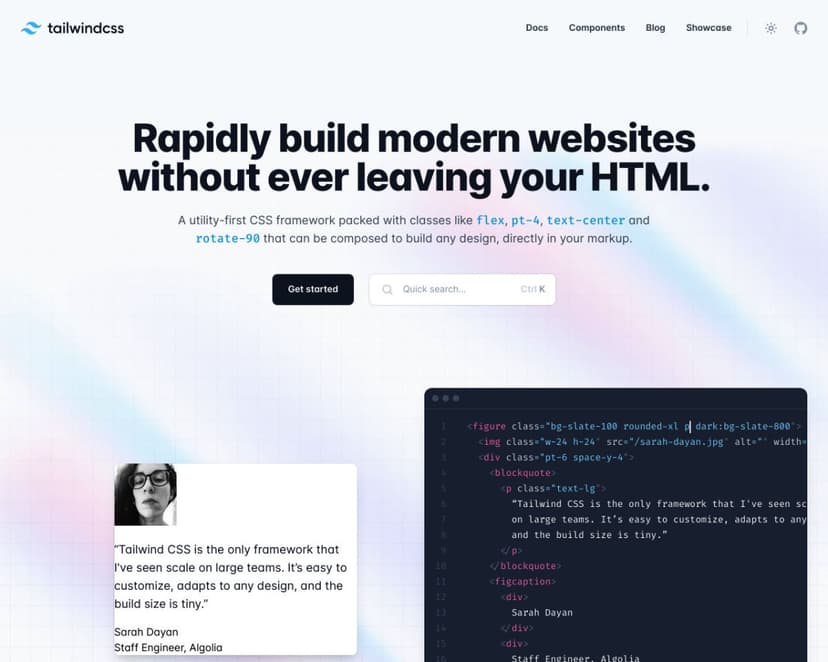
Discover Tailwind CSS, the utility-first CSS framework for building responsive, customizable websites quickly and efficiently. Explore features, prici...
The reference utility-first framework: you style in your markup with utility classes, which keeps CSS from growing as the project does.
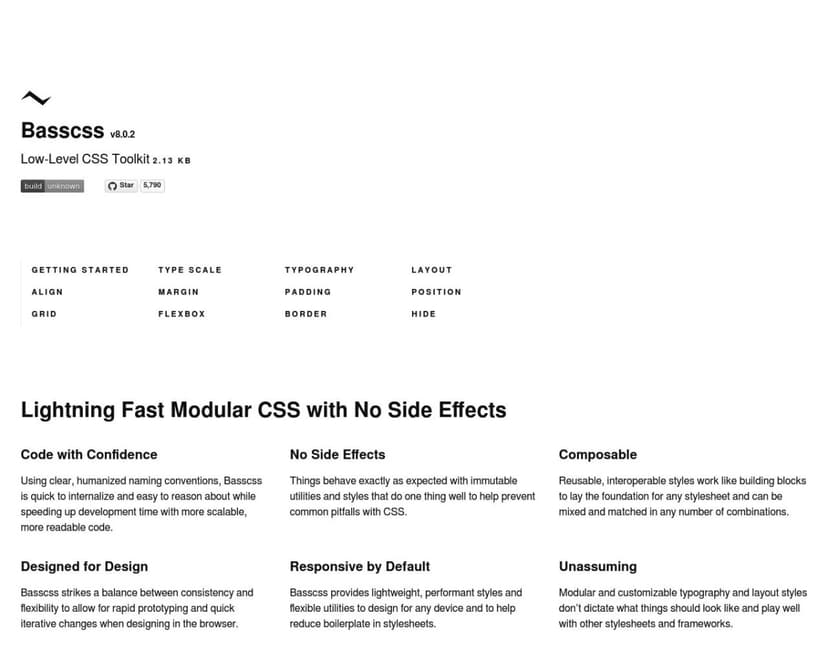
Discover Basscss, the lightweight CSS toolkit designed for speed, flexibility, and scalability. Explore features, pricing, and benefits today!
A low-level toolkit of tiny, composable classes, a very small utility-first option if Tailwind feels like too much.
Component-based frameworks
3 itemsReady-made grids, buttons, forms and navigation so you can ship a consistent UI quickly.
Component-based frameworks
3 itemsReady-made grids, buttons, forms and navigation so you can ship a consistent UI quickly.
The most widely used component framework, with a prebuilt responsive grid, many components and Sass customization.
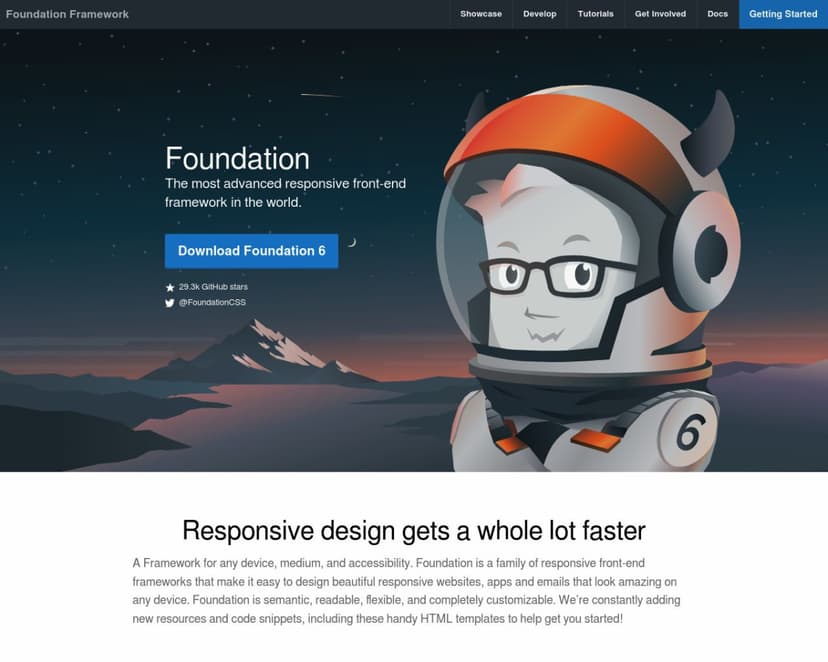
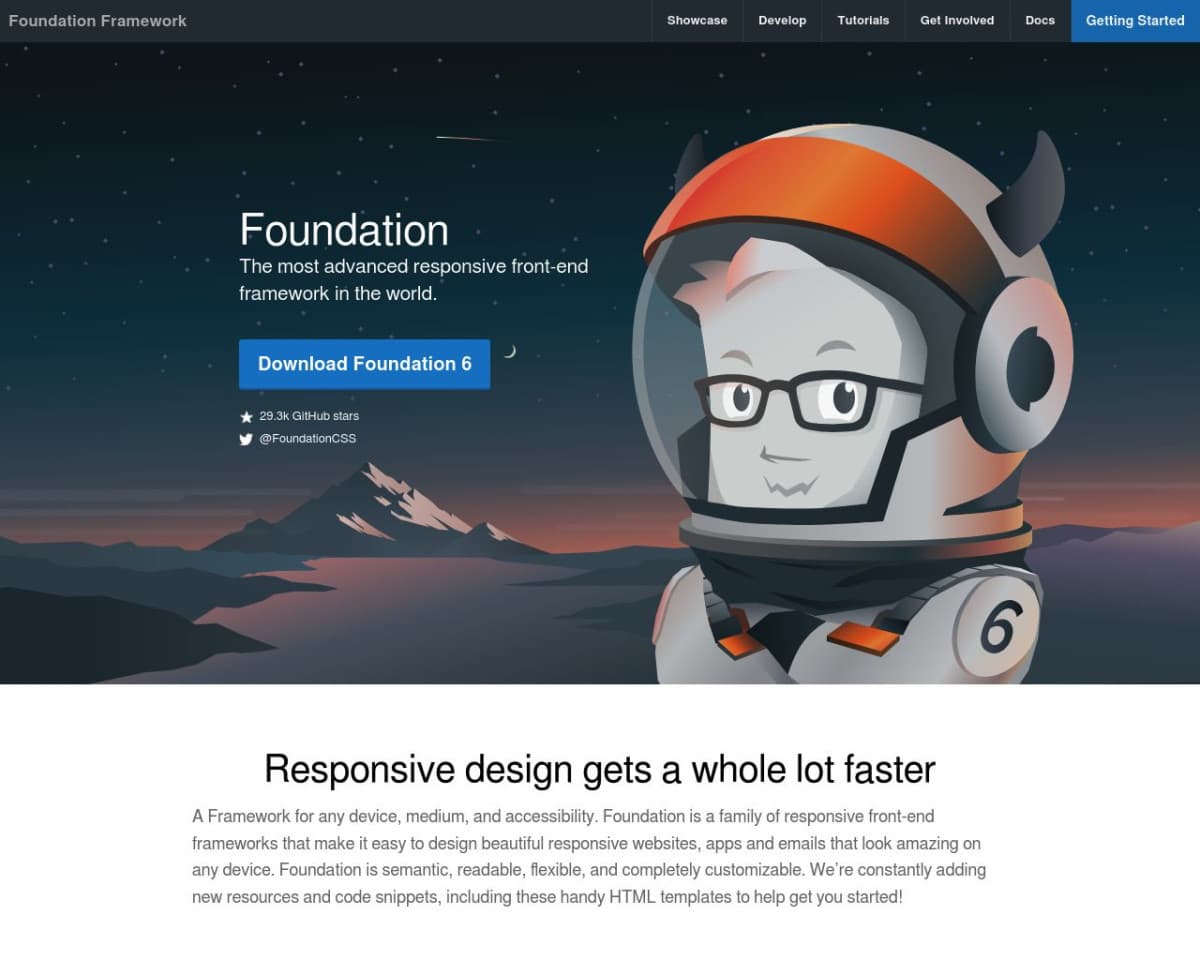
Discover Foundation, the most advanced responsive front-end framework for creating beautiful websites and emails. Explore features, pricing, and benef...
A mature responsive framework with a flexible grid, and a companion approach for building HTML emails.

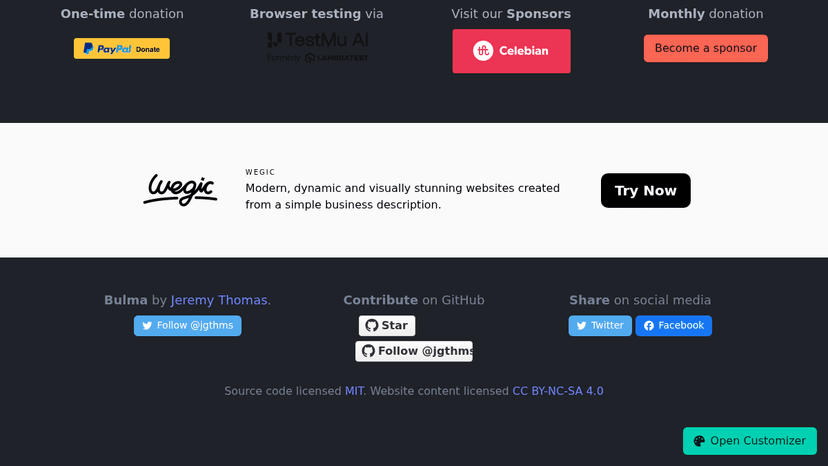
Free, open source CSS framework based on Flexbox — build responsive web interfaces without writing CSS, no JavaScript required
A CSS-only framework built on Flexbox with no bundled JavaScript, so you choose how to add interactivity.
Built on Tailwind CSS
2 itemsAdd pre-built components to Tailwind without giving up utility classes.
Built on Tailwind CSS
2 itemsAdd pre-built components to Tailwind without giving up utility classes.

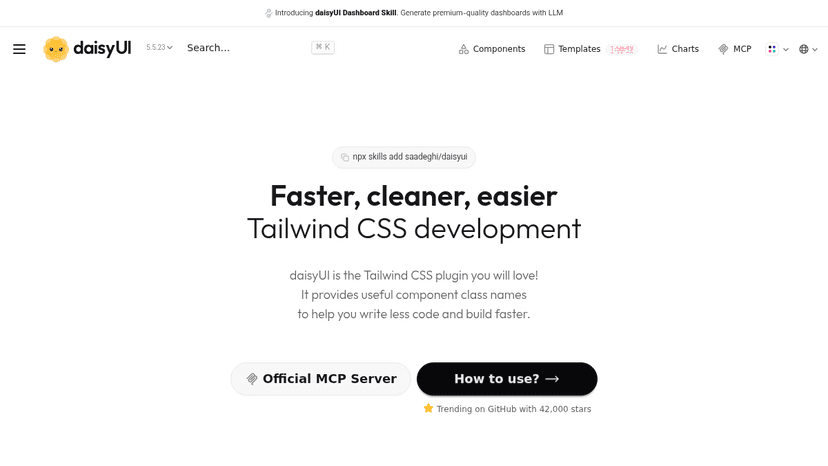
Tailwind CSS component library that reduces class names by 88% and HTML size by 79%, letting you build faster with semantic components and built-in th...
A Tailwind plugin that adds semantic component classes such as buttons and cards, cutting down the long class lists.

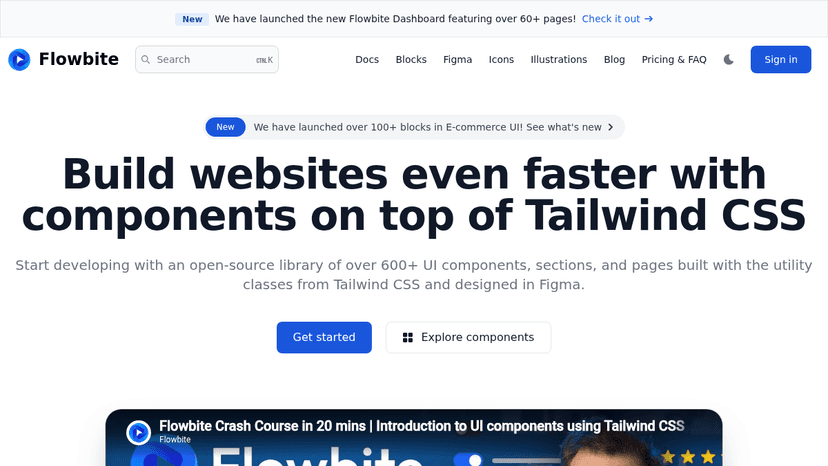
Build UI faster with Tailwind CSS components, blocks, and Figma design resources
Tailwind-based component library with ready-made blocks and a Figma kit for design-to-code handoff.
Minimal and lightweight
3 itemsTiny stylesheets for small sites, prototypes and projects where bundle size matters.
Minimal and lightweight
3 itemsTiny stylesheets for small sites, prototypes and projects where bundle size matters.
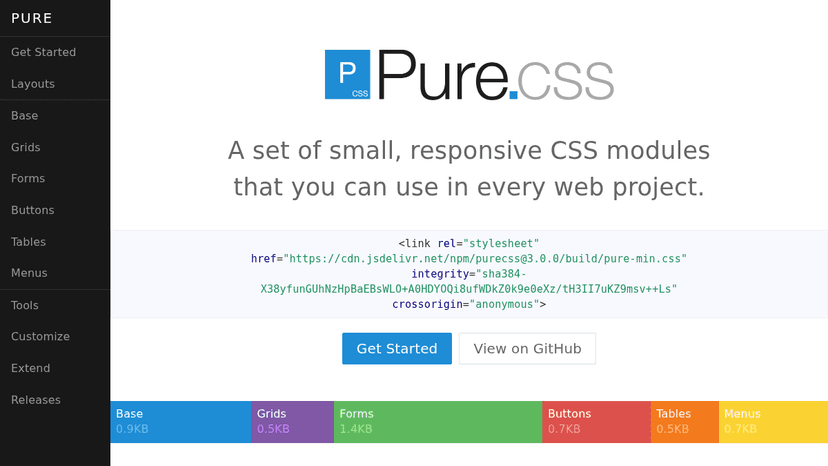
Pure is a ridiculously tiny CSS library you can use to start any web project.
A small CSS foundation (about 3.5KB) with responsive layouts and basic styles for common elements.

A minimalist framework of roughly 2KB gzipped with sensible typography and form defaults.
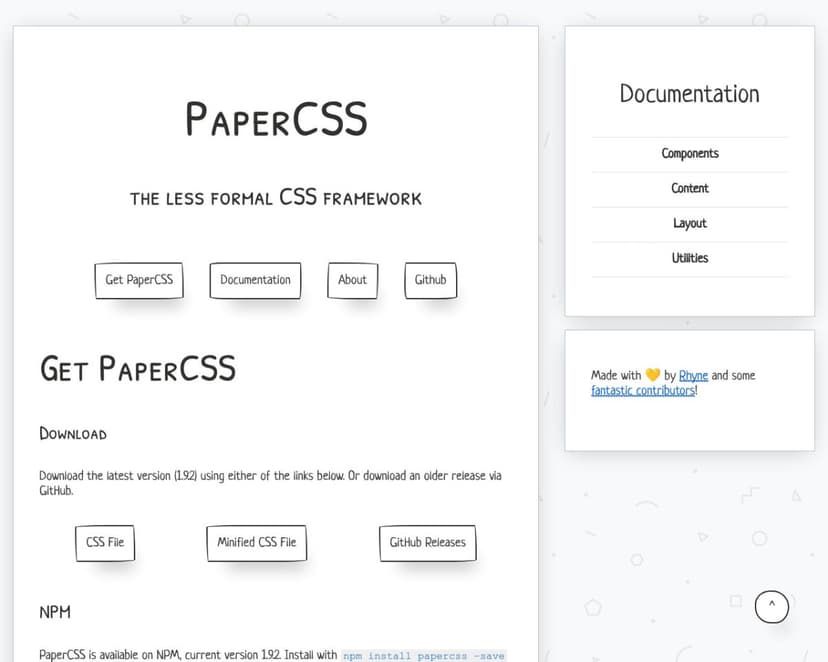
Discover PaperCSS, the playful CSS framework that brings a hand-drawn, paper-like aesthetic to your web projects. Explore features, pricing, and benef...
A hand-drawn, sketchy look for a casual, personal feel, useful when a polished corporate style is wrong for the project.