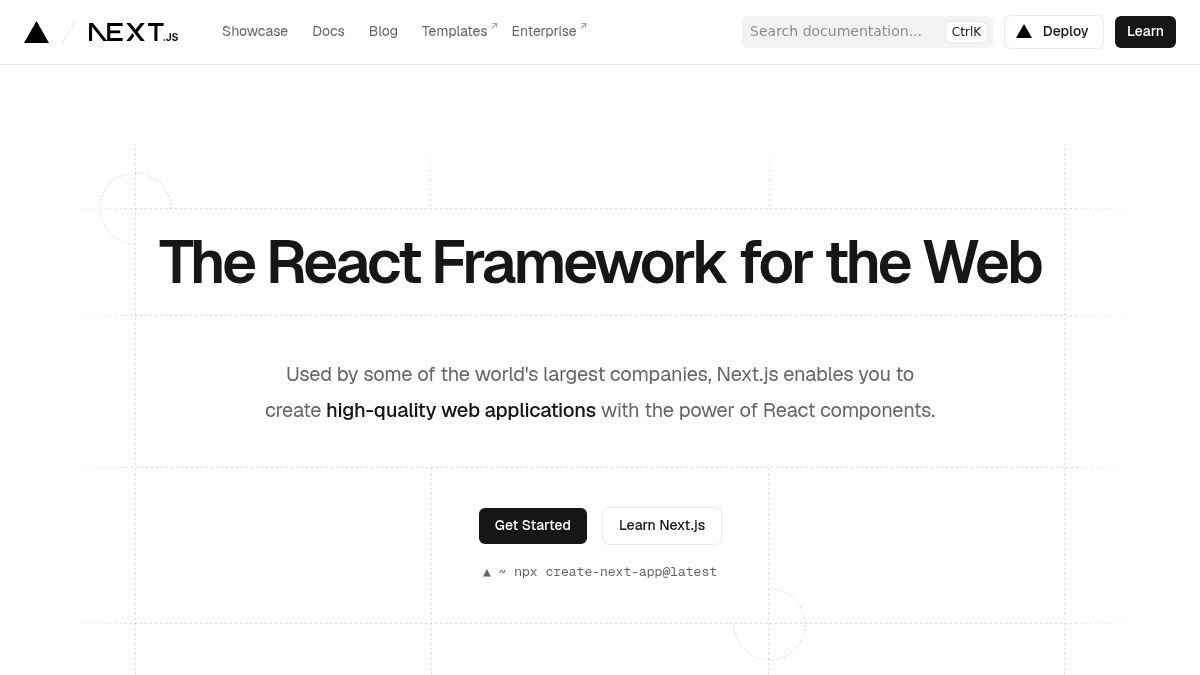
About Next.js
Overview Next.js is a full-stack React framework for building web applications. It enables developers to create high-quality web apps using React components with server-side rendering, static generation, and incremental static regeneration. Used by some of the world's largest companies, Next.js provides everything needed to build production-grade web applications. It is built on the latest React features including Server Components and Actions, and uses Turbopack as its bundler. Key Benefits Supports both server and client data fetching with async React components. Run server code by calling a function directly, skipping the need for a separate API layer. Create routes using the file system with support for advanced routing patterns and nested layouts. Flexible rendering and caching options including Incremental Static Regeneration (ISR) on a per-page level. Add React Server Components without sending additional client-side JavaScript. Built on Turbopack, an incremental bundler written in Rust for fast development. How It Works You start a new project by running npx create-next-app@latest in your terminal. You create routes using the file system, make React components async to fetch data, and call server functions directly without writing a separate API layer. Next.js handles rendering, caching, and bundling automatically using Turbopack and the Speedy Web Compiler. Use Cases Ecommerce teams building high-performance online stores with Next.js Commerce starter kits. AI application developers creating real-time and SaaS products with pre-built templates. Blog and content site creators using static generation for fast page loads. Enterprise teams building multi-tenant applications and real-time apps at scale. Developers building portfolio and virtual event sites with pre-built community templates. Why Choose This Product Next.js is best suited for developers and teams building production-grade React applications who want server-side rendering, static generation, and API routes in a single framework. It is open-source and free to use, with deployment optimized on Vercel but compatible with any hosting provider.
Next.js Pros & Cons
- Open-source and free to use
- File-system based routing
- Supports server and client rendering
- Built on latest React features
- Turbopack bundler for fast development
Key Features
Data Fetching
Make React components async and await data, with support for both server and client data fetching.
Server Actions
Run server code by calling a function directly, skipping the need for a separate API layer.
File-system Routing
Create routes using the file system with support for advanced routing patterns and nested layouts.
CSS Support
Style applications with CSS Modules, Tailwind CSS, and popular community libraries.
Route Handlers
Build API endpoints to securely connect with third-party services for authentication and webhooks.
Server Components
Add components without sending additional client-side JavaScript, built on the latest React features.
Hybrid Rendering
Flexible rendering and caching options including Incremental Static Regeneration (ISR) on a per-page level.
Proxy & Middleware
Use code to define routing and access rules for authentication, experimentation, and internationalization.
Next.js Pricing
Pricing extracted from the product website and may change. Check the source for current details.