
Monako Glass
Updated: Nov 26, 2026
A 48-gram Linux computer in an eyewear frame: full root access, agent-written Lua apps without a build step, and connectors for Claude Code, Blender and Unreal Engine.
About Monako Glass
Overview
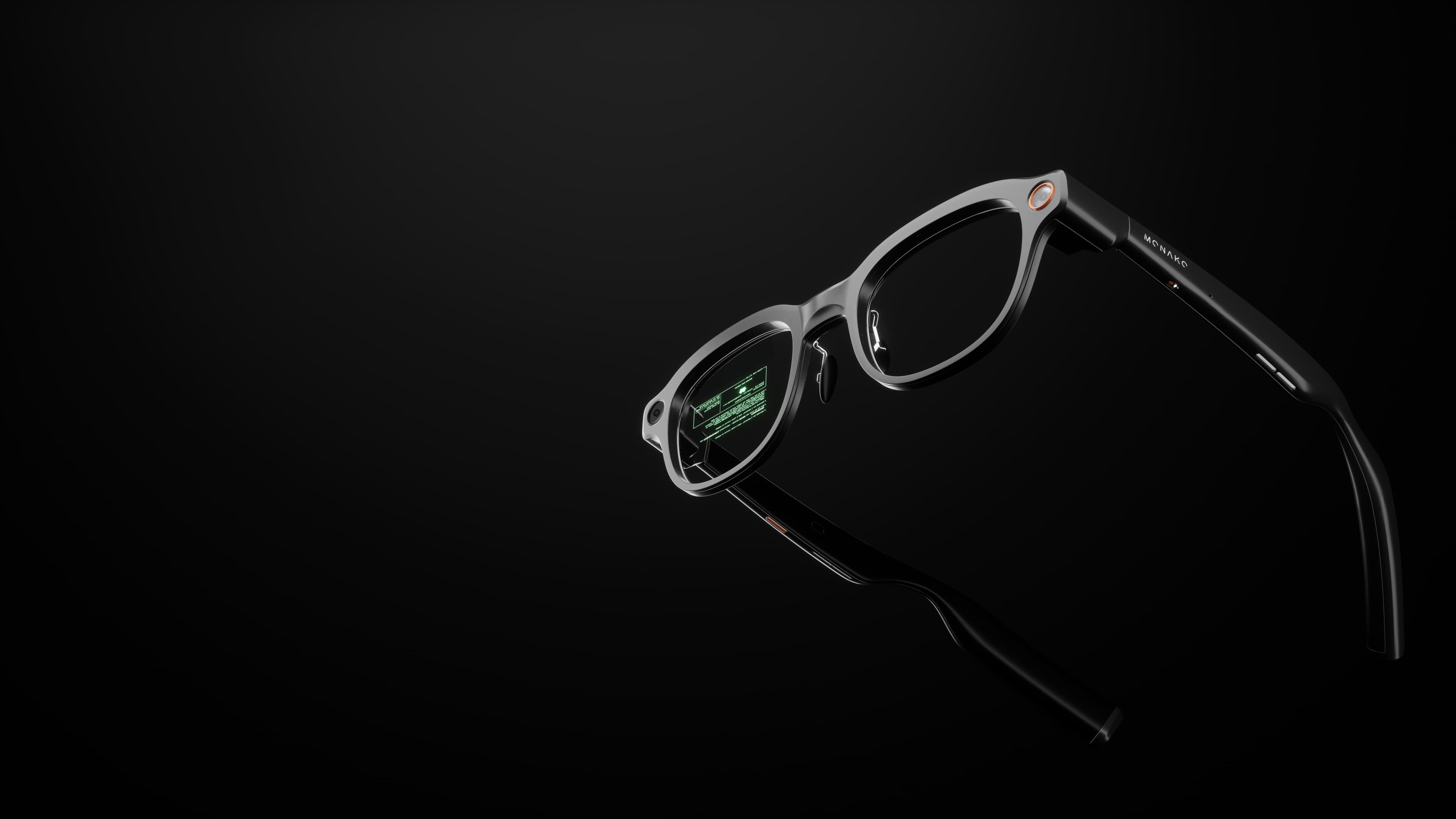
Monako builds Monako Glass, a wearable Linux computer housed in an eyewear frame. A MicroLED waveguide display, camera, speakers and a bone-conduction microphone sit in a frame that targets roughly 48 grams, about the weight of a standard pair of sunglasses. The team positions the device as a tool for building projects rather than for recording everyday moments.
Monako Glass runs MonoOS, a Linux 5.10 arm64 operating system with a Lua application layer and an embedded Rive animation runtime. Listed engineering targets include a Qualcomm Snapdragon AR1 SoC with a Hexagon v73 NPU, a Sony IMX681 12.2 MP camera and a 300 mAh battery rated for up to 8 hours of normal use. Monako states that these figures are development specs subject to validation before shipping.
Key Benefits
- A bone-conduction microphone reads nasal vibrations, keeping voice input quiet and clear in loud surroundings.
- The Vision Engine turns micro hand gestures into precise digital commands.
- Open Linux with root access lets owners run their own daemons, WireGuard, Tailscale and custom services.
- Lua apps need no build step, so agent-generated applications launch immediately.
- The 48-gram frame balances weight toward the rear arms for all-day wear.
- Agent Terminal connectors join Claude Code, Codex, Unreal Engine, Blender and After Effects in one workstation.
How It Works
Buyers reserve a pair; the first batch is sold out and Monako targets Q1 2027 for first-batch shipping. Owners get MonoOS on the glasses along with planned developer resources: a Lua SDK, example applications, documentation, system images and staged emulator releases. Developers write or generate Lua apps that run without compilation, and workflows stretch across the glasses, cloud sandboxes and a local Mac or PC.
Use Cases
- Developers use root and sudo access, package management and persistent background daemons on a Linux 5.10 arm64 device.
- AI agent users connect Claude Code or Codex through Agent Terminal and run the resulting Lua apps on the glasses.
- 3D and VFX artists drive Unreal Engine, Blender or After Effects from a single wearable station.
- Hardware tinkerers reach live camera frames, the HUD, speakers, IMU and ring input through the SDK.
- Desk workers and commuters wear the rear-weighted 48-gram frame through a full workday.
- Wearers needing vision correction add prescription lenses to the frame.
Why Choose This Product
Monako builds the device as an open computer instead of an accessory for one AI assistant. Root access, open interfaces, local plus cloud AI and bring-your-own-agent support let developers build on the platform, and system snapshots let owners roll back to a previous state. The tradeoffs are visible too: memory and storage remain unannounced, and shipping follows a production target rather than a firm date.
Monako Glass Pros & Cons
- Bone-conduction mic keeps voice input usable in noisy places
- Full root and sudo access with standard Linux package management
- Targets roughly 48 grams, matching standard sunglasses
- Agent Terminal connectors for Claude Code, Blender and Unreal Engine
- Lua apps run with no build step or compilation
- Memory and storage specs are still to be announced
- Battery rated for up to 4 hours of screen-on time
- First batch is sold out; shipping targeted for Q1 2027
- Final production specs still subject to validation
Key Features
Waveguide Display
A 1400-nit MicroLED light engine projects a green 640×480 image at 60 Hz through a waveguide driven by the MonoOS spatial UI.
Bone-Conduction Mic
The microphone captures nasal vibrations for quiet voice input and works alongside three acoustic microphones.
Vision Engine Gestures
Hand tracking converts micro gestures into precise digital commands on the glasses.
Agent Terminal Connectors
Built-in connectors link Claude Code, Codex, Unreal Engine, Blender and After Effects into one workstation.
Open Linux Access
The glasses run Linux 5.10 arm64-v8a with full root and sudo access, standard package management and system snapshots.
Lua App Layer
LuaJIT apps use 200–500 KB of RAM each and run without a build step, so agents generate and launch them on the fly.
Rive Animation Runtime
An embedded Rive runtime delivers state-driven vector interface animation on wearable hardware.
Snapdragon AR1 NPU
A Qualcomm Snapdragon AR1 SoC pairs four Cortex-A55 cores with a Hexagon v73 NPU rated near 2.4 TOPS INT8.
48-Gram Frame
The rear-weighted temple design holds the frame at approximately 48 grams with prescription lens support.
Open Camera Access
A Sony IMX681 12.2 MP camera with a 30-degree field of view provides open live frames to owner software.
Monako Glass Pricing
Pricing extracted from the product website and may change. Check the source for current details.
Frequently asked questions about Monako Glass
How is the battery life of Monako glasses?
Monako glasses carry a 300 mAh battery with up to 4 hours of screen-on time and up to 8 hours of normal use. The device conserves power by turning off the display after 15 seconds of inactivity and pausing certain processes while the display is off. Battery life varies with usage, such as continuous computer vision tasks or connectivity features.
When will Monako Glass ship?
Monako targets Q1 2027 for first-batch shipping and states that this is not a guaranteed delivery date. The team publishes official production updates as it moves toward mass production.
How much does Monako Glass cost?
The $399 price is locked for the 2,500 existing early backers. The historical $19 reservation payment was a deposit, not the full product price, and future-batch pricing will be announced separately.
Do developers get full root and sudo access with normal Linux package management?
Yes. Monako also provides system snapshot functionality so owners can revert to a previous state if something breaks.
Can my own services run persistently in the background, and can I run WireGuard or Tailscale on the glasses?
Yes. The FAQ states your services and daemons can run in the background while other MonoOS apps are in use, and the team expects no restrictions on running networking tools such as WireGuard or Tailscale.
Does camera access include live frames for my own software?
Camera access is open, and Monako plans to publish best practices for developers within the SDK.