
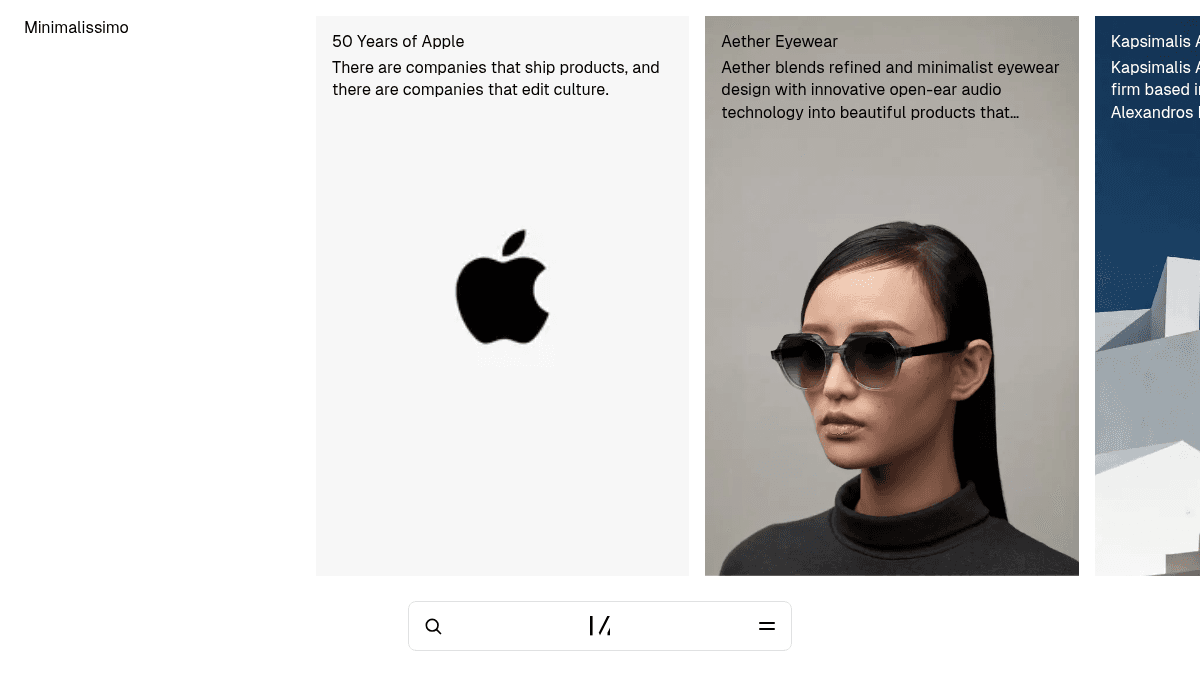
About Minimalissimo
Overview
Minimalissimo is a global editorial and curational platform dedicated to minimalist design and culture. It distills the best in architecture, product design, interiors, and photography into a single destination for creators, brands, and enthusiasts who find meaning in simplicity.
Unlike broad design aggregators, Minimalissimo maintains a strict editorial focus on the essential — connecting disciplines through a shared philosophy of restraint and clarity, rather than volume or trend-chasing.
Key Benefits
- Access curated coverage of minimalist products, from furniture and lighting to espresso machines and accessories.
- Read in-depth interviews with leading designers, architects, and brand founders including Matthew Hilton, Guillaume Alan, and Victoria Yakusha.
- Discover architectural profiles from studios such as Kapsimalis Architects, known for Cycladic holiday houses and hotel complexes in Santorini.
- Explore a gathering place connecting creators and brands within a focused minimalist design community.
- Get editorial insight into design philosophy, process, and culture — not just product listings.
How It Works
Visitors browse editorially curated content across categories including products, interviews, and architecture. Each piece spotlights a specific designer, brand, or object, presenting a focused profile or conversation. Readers click through individual features — such as a designer interview or a product spotlight — to engage with the full editorial content.
Use Cases
- Independent product designers looking to stay informed about the philosophy and process behind leading minimalist studios.
- Interior designers and architects seeking reference material and peer interviews from practitioners like Guillaume Alan or Kapsimalis Architects.
- Brand founders in the design space exploring how other brands — such as Aether Eyewear or Palm — articulate their design identity.
- Design photographers and visual artists discovering how peers like Paul Jung approach negative space and stripped-back aesthetics.
- Design students and educators using editorial interviews to understand real-world design thinking from figures like Hallgeir Homstvedt or Kaschkasch.
Why Choose This Product
Minimalissimo suits creators, collectors, and culture-followers who want editorial depth over algorithmic noise. The platform's strict curational lens — focused entirely on minimalism across disciplines — sets it apart from general design blogs or social aggregators. No explicit limitations are mentioned in the source content.
Minimalissimo Pros & Cons
- Editorial depth with long-form designer and brand interviews
- Strict curational focus on minimalism across multiple disciplines
- Global coverage spanning architecture, product design, and photography
- Features both emerging studios and established names in minimalist design
Key Features
Designer Interviews
In-depth conversations with designers, architects, and brand founders exploring philosophy, process, and creative direction.
Product Curation
Editorially selected minimalist objects — from furniture and lighting to tech accessories and espresso machines — are featured and profiled.
Architecture Profiles
Featured profiles of architectural studios, such as Kapsimalis Architects, covering design approach, sustainability, and cultural context.
Photography Features
Spotlights on photographers like Paul Jung who work within minimalist visual aesthetics and negative-space composition.
Global Editorial Platform
Content spans designers and brands from Norway, Germany, Ukraine, Greece, and beyond, reflecting a global minimalist design community.
Brand Spotlights
Long-form features on brands such as Aether Eyewear and Palm examine product philosophy, design decisions, and cultural positioning.
How Minimalissimo compares
MinimalissimoThis | |||
|---|---|---|---|
| Starting price | — | Free | — |
| Pricing model | unknown | Free | unknown |
| Platforms | Web | Web | — |
| Top features |
|
|
|
| Rating | — | — | — |

