Best Design & Creative Tools in 2026
This broad category gathers design and creative tools that support visual project work, ranging from generative AI studios to icon editors. The supplied sample includes AI tools that turn text and images into images, video, and 3D content, design systems like Material Design, font managers, and CSS gradient libraries. Some products are reference resources, such as website galleries, while others are working utilities for building, editing, or downloading assets. Children split the category into 3D modeling, asset marketplaces, icon libraries, prototyping, and related niches.
Browse Design & Creative by topic
Design Systems
A well-built design system keeps product teams from redrawing the same button, debating spacing rules, and shipping slightly different versions of the same interface. These tools organize reusable components, design tokens, usage guidelines, accessibility notes, and coded examples so designers and developers work from a shared source. Figma, Storybook, and Zeroheight are commonly used across different parts of that process. A team might update a primary button’s color token once, review the change in Storybook, and apply it across every product without fixing screens one by one. AI can help document components, detect inconsistencies, and suggest missing states, but it cannot decide which patterns deserve to become standards. A design system should make intentional work easier, not turn every interface into a rigid assembly line. The strongest systems reduce needless variation while leaving room for product-specific judgment; the weakest are component libraries nobody trusts.
UI Design
UI design is about making a screen's structure, hierarchy and interactions understandable. The listings here include design workspaces such as Penpot, Sketch and Pixso, component-based approaches such as Subframe, and learning resources such as Refactoring UI. A design editor and a practical design book can support the same project, but they solve different needs. For software, try a screen with reusable components, responsive layouts and several states, then check how it reaches developers. For a learning resource, look for examples you can apply to your own interface. Compare collaboration, component control and handoff against the way your team works, rather than choosing only from a polished demonstration.
Product Design
Good product design tools help teams move from vague ideas to testable interfaces without losing the reasoning behind the work. They cover wireframing, UI generation, prototyping, user-flow mapping, design systems, and feedback, with tools like Figma, Uizard, and Framer handling different parts of the process. A designer might turn a rough checkout flow into clickable screens, test it with users, then revise the component states before engineering starts. The AI is most useful for producing options, filling repetitive layouts, and exposing gaps in a flow—not deciding what the product should be. Generated screens often look polished before they are coherent, so usability, accessibility, and edge cases still need careful review. The best product design tools make iteration cheaper while keeping designers close to the problem. Pretty mockups are easy; a product that makes sense is still the real work.
Design Assets
Design asset tools are useful when a team needs usable visual material without starting every icon, mockup, background, or illustration from scratch. This category covers AI tools for generating brand graphics, UI elements, social visuals, product mockups, textures, image variations, and cleaned-up assets ready for a design system or campaign. Tools like Canva, Adobe Firefly, Midjourney, and Figma can help at different stages, but the real value comes from getting assets that fit the job instead of filling a folder with random pretty outputs. A designer might generate a set of abstract hero images for a SaaS landing page, pick the one that supports the message, then adjust colors, cropping, and spacing before it ever reaches production. The strongest tools make visual exploration cheaper and less precious. The weakest ones create asset libraries nobody wants to maintain.
Web Design
Good web design tools help move an idea out of a blank canvas without flattening it into the same startup template everyone else is using. In this category, AI can draft site structures, generate landing page copy, suggest layouts, create wireframes, and turn rough prompts into editable pages. Tools like Framer, Webflow, Wix, and Relume are useful when the work needs both visual direction and practical structure. A founder might describe a new analytics product, get a homepage wireframe with sections for pain points, proof, pricing, and FAQs, then rewrite the weak parts before handing it to a designer or building it directly. The best AI web design tools still leave room for taste, spacing, hierarchy, and brand judgment. A website can be generated quickly, but a credible one still needs someone who knows what should be left out.
Graphic Design
Graphic design tools turn rough ideas into usable visual assets without reducing the work to generic templates. This category covers social graphics, brand materials, ads, posters, thumbnails, illustrations, and quick image edits, with AI often handling layout suggestions, background removal, copy variations, and style exploration. Tools like Canva, Adobe Express, and Kittl are useful when the goal is fast production with enough control to keep the result on brand. A small business owner might upload a product photo, remove the background, build three ad versions, and resize them for different channels in one session. The hard part is still deciding what deserves attention and what should be removed. AI can produce dozens of competent options, but it has no instinct for hierarchy, restraint, or brand character. The strongest tools support judgment; the weak ones make everything look equally polished and equally forgettable.
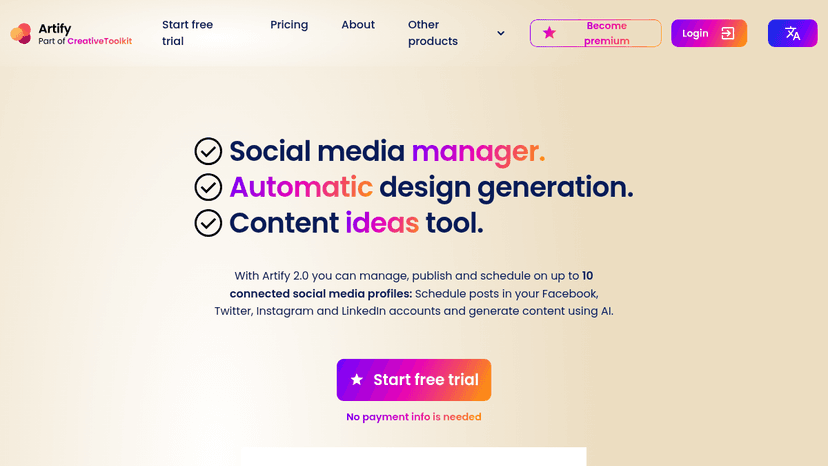
Discover Artify 2.0, the ultimate tool for enhancing your social media presence. Effortlessly manage, schedule, and create content with AI-driven feat...
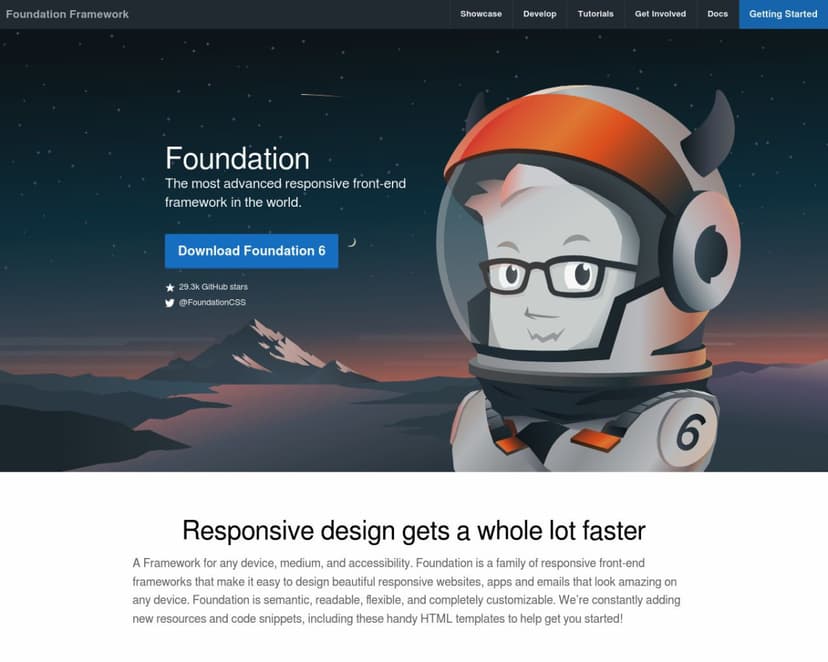
Discover Foundation, the most advanced responsive front-end framework for creating beautiful websites and emails. Explore features, pricing, and benef...
About Design & Creative tools
Because the field spans many kinds of software, decide first which task you need covered: generating fresh content, finding ready-made assets, or laying out an interface. Check each listing for supported platforms and pricing models, since the free, freemium, and paid tiers vary by product. Readers can examine a product's tagline and description for what it makes or supplies, then confirm fit against their own workflow. The sample contains products without platform or pricing details, so verify any unknown fields before relying on a tool.
Compare top 5 Design & Creative tools
Side-by-side highlights for the top-ranked products in this category. Products whose main category this is come first, then by featured placement, upvotes, ratings, and review count.
| Compare |  PatternFly Product page | L Lightning Design System 2 (SLDS 2) Product page |  Primer Product page | S Spectrum Product page |  Vyond AI Video Creation Platform for Business Product page |
|---|---|---|---|---|---|
| Best for | Red Hat's MIT-licensed open source design system: build consistent, accessible enterprise applications with React and HTML libraries, design guidelines, and an open community. | Build consistent, accessible Salesforce experiences with a CSS custom property framework, AI-powered Figma-to-code tooling, and dark mode support — for admins, designers, and developers. | GitHub's design system for building product interfaces, brand assets, and marketing experiences with reusable React components, Octicons, and design tokens. | Adobe's open-source design system with components, principles, and resources that keep applications cohesive and help product teams work more efficiently. | Turn text, documents, or URLs into professional AI business videos with avatars, text-to-speech voices, 95-language translation, and enterprise-ready security. |
| Pricing | Free | Free | Free | Free | from $58/month |
| Platforms | Web | — | — | — | — |
| Rating | — | — | — | — | — |
| Upvotes | 0 | 0 | 0 | 0 | 0 |
| Verified | No | No | No | No | No |
| Launch date | — | — | — | — | — |
Design & Creative FAQ
Common questions about this category, how we rank products, and how often the page is refreshed.
What are the best Design & Creative tools on MazikBox?
The top-ranked Design & Creative products right now are PatternFly, Lightning Design System 2 (SLDS 2), and Primer. The comparison table above shows them side by side.
How do you rank Design & Creative products?
Products whose main category is Design & Creative (or one of its subcategories) are listed first, followed by products that also fit the category. Within each group we order by featured placement, then upvotes, average rating, review count, and newest listing. Featured placement is an editorial choice, not a quality score.
What pricing models are common for Design & Creative tools?
On this page you will find free and paid (from $58/month) options, depending on the tool. Check the comparison table and individual product pages for specifics.
Which platforms do these Design & Creative tools support?
The products currently shown in this category support web workflows. Platform coverage varies by tool, so compare product pages before choosing one.
How often is this Design & Creative page updated?
The category description and details were last edited on October 5, 2026. The product list, ranking, and counts update automatically as products, votes, and reviews change.
How many Design & Creative tools are listed right now?
MazikBox currently lists 462 Design & Creative products in this category, with more added as they meet our editorial standards and category fit.